FUQING, China, Aug. 28, 2024 /PRNewswire/ — A news report by Huanqiu.com
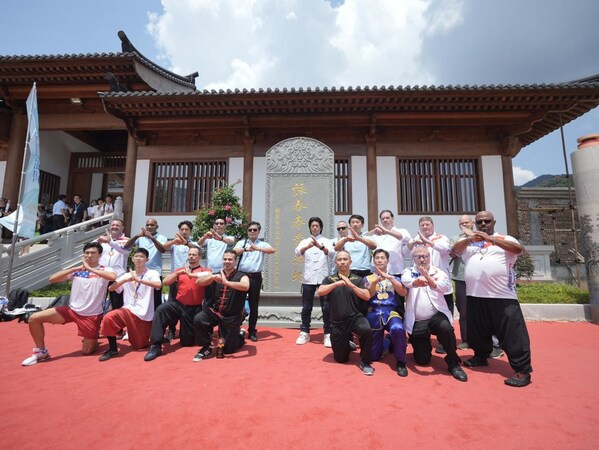 Wing Chun practitioners from all over the world gathered at the birthplace of Wing Chun (Source: Huanqiu.com)
The Southern Shaolin Temple in Fuqing, a city steeped in the annals of Chinese martial history, recently concluded the first World Southern Shaolin Wing Chun Competition. The event was more than a martial arts tournament; it was a vibrant celebration of Chinese heritage and Shaolin culture, drawing practitioners and enthusiasts from around the world to compete and connect through the ancient art of Wing Chun.
The competition, which began on April 3, saw nearly 1,000 entrants vying for honors in several complex disciplines including Siu Nim Tao (Little Idea), Cham Kiu (Seeking the Bridge), Biu Tze (Thrusting Fingers), Bart Cham Dao (Eight Cutting Knives), Luk Dim Boon Kwun (Six and a Half Point Pole), Mook Yan Jong (Wooden Dummies), and Chi Sau (Sticking Hands). After three days of rigorous contests, 36 participants emerged victorious, having demonstrated supreme mastery in their respective categories.
Held across multiple phases and on three continents—Asia, Europe and the Americas—the competition’s structure, from online preliminaries to the final confrontations, underscored the global resonance of Wing Chun, a martial art known for its emphasis on close combat, quick arm movements, and strong leg work. The tournament highlighted the enduring appeal and cultural significance of Wing Chun, celebrating its role in fostering international camaraderie and mutual respect through martial prowess.
Archaeological and historical research reveals that the Southern Shaolin Temple in Fuqing was established during the Zhenguan era of the Tang Dynasty. Flourishing through the Song and reaching its zenith in the Ming Dynasty, the temple has a storied past, steeped in the confluence of Zen, martial arts, and medicinal knowledge. Over the centuries, despite numerous challenges, it has maintained and enhanced its esteemed cultural legacy, influencing countless generations both in China and worldwide.
Wing Chun, a distinctive style of Kung Fu that originated at this historic temple, is traced back to Wu Mei, a figure deeply influenced by a Zen Master during the late Ming and early Qing Dynasties. Recognized in 2014 as part of China’s national intangible cultural heritage by city of Fuzhou, Wing Chun not only represents the rich heritage of Chinese martial arts but also stands as a global phenomenon with over ten million practitioners. This recognition underscores the profound impact of the Southern Shaolin Temple on the world stage, symbolizing a legacy of endurance and cultural exchange through martial arts.
This content was prepared by our news partner, Cision PR Newswire. The opinions and the content published on this page are the author’s own and do not necessarily reflect the views of Siam News Network


